Deep Diagnostic Scan on a 2008 Ford F-150 Losing Power
When a truck starts losing power, the wrong move is swapping parts and hoping for the best. That costs money and time - and it usually doesn't fix the actual problem. The right move is what we did here: plug in a professional-grade scan tool and let the data tell the story.
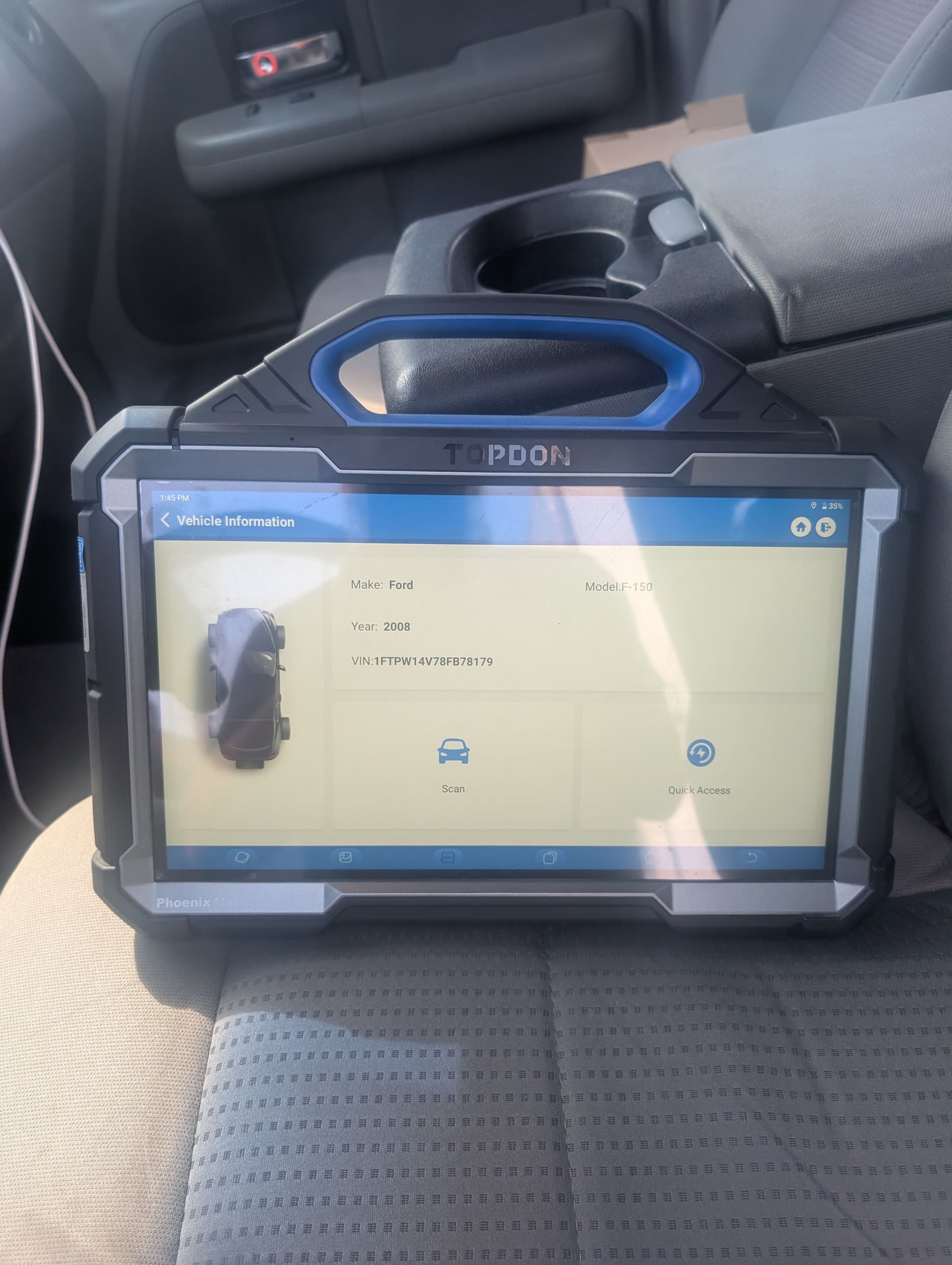
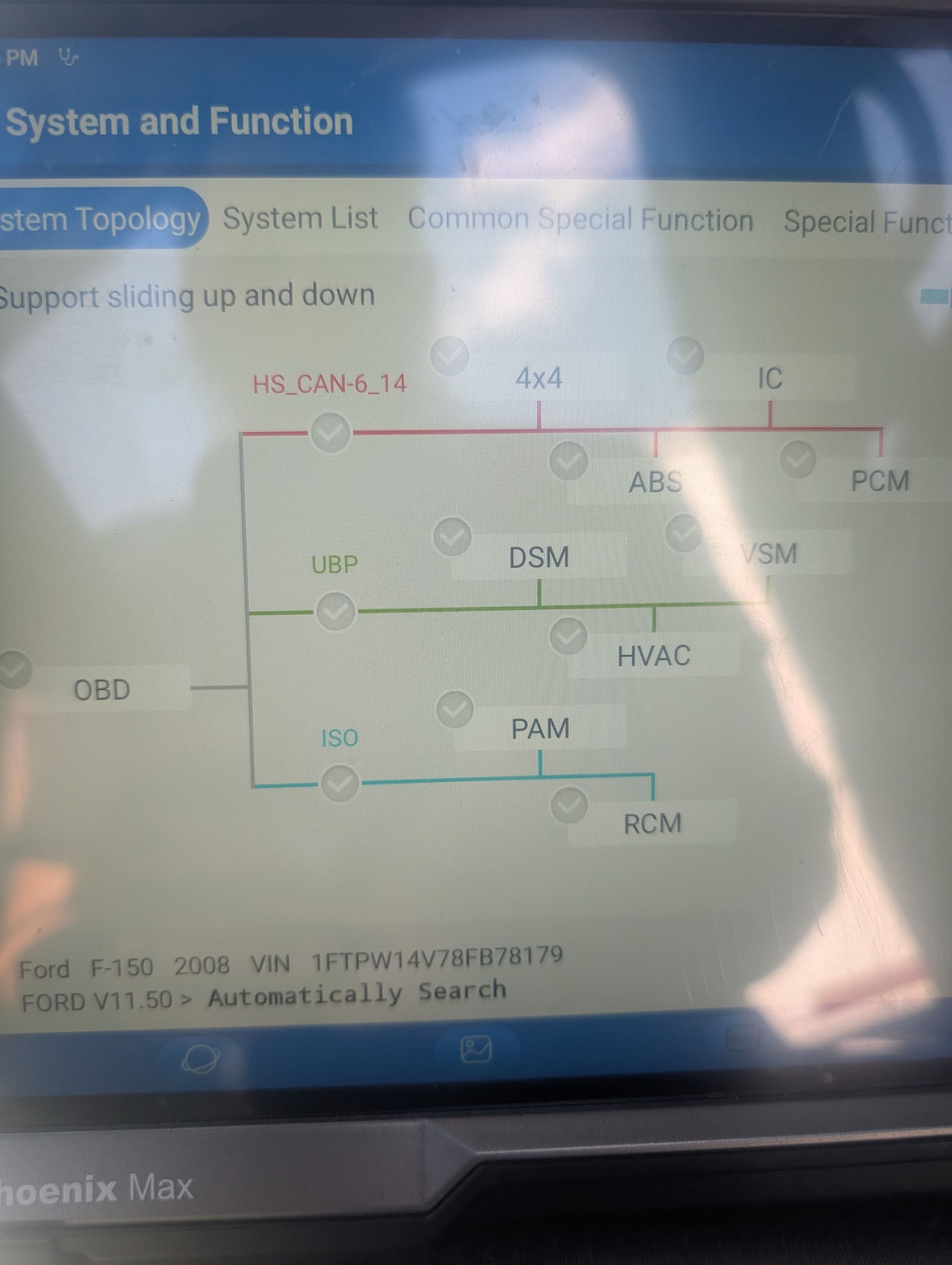
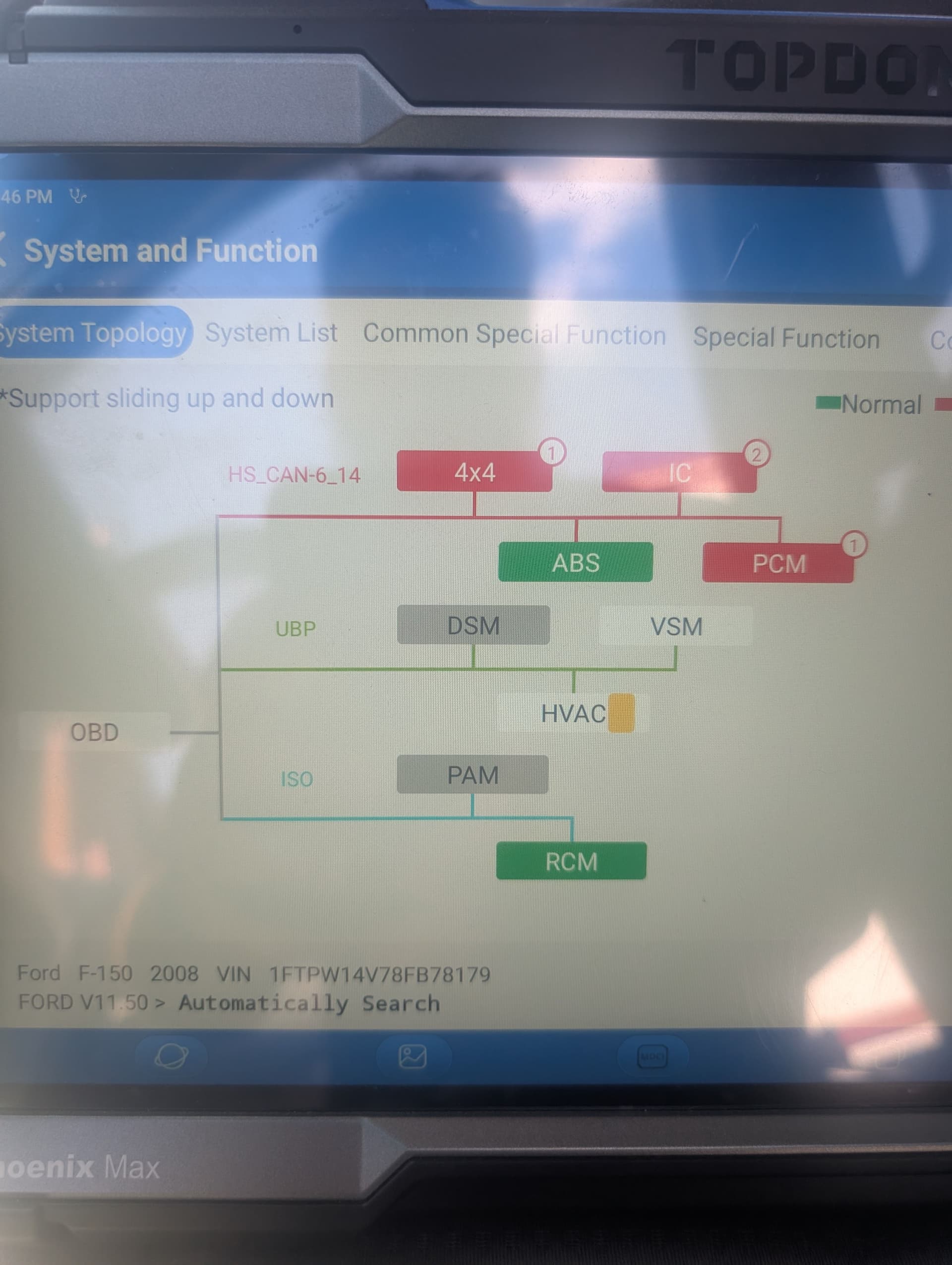
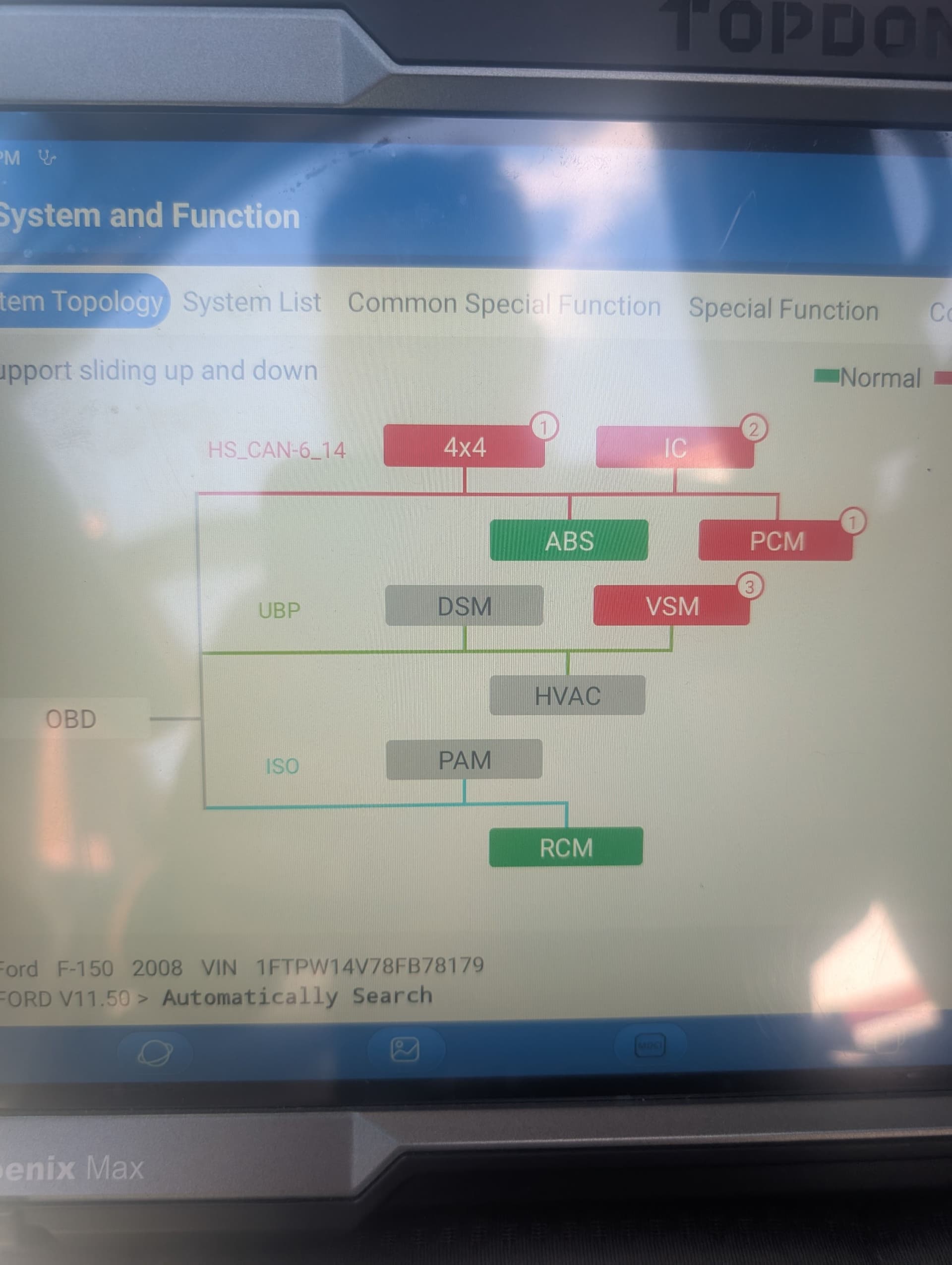
We ran a full system scan on this 2008 Ford F-150 using the Topdon Phoenix Max. That tool doesn't just pull a single code like a basic OBD reader at an auto parts store. It maps out every module on the vehicle - the PCM, ABS, instrument cluster, 4x4 control module, vehicle security module, HVAC, and more. Once it auto-searches the truck's systems, you can see exactly where faults are hiding and which ones are actively causing problems.
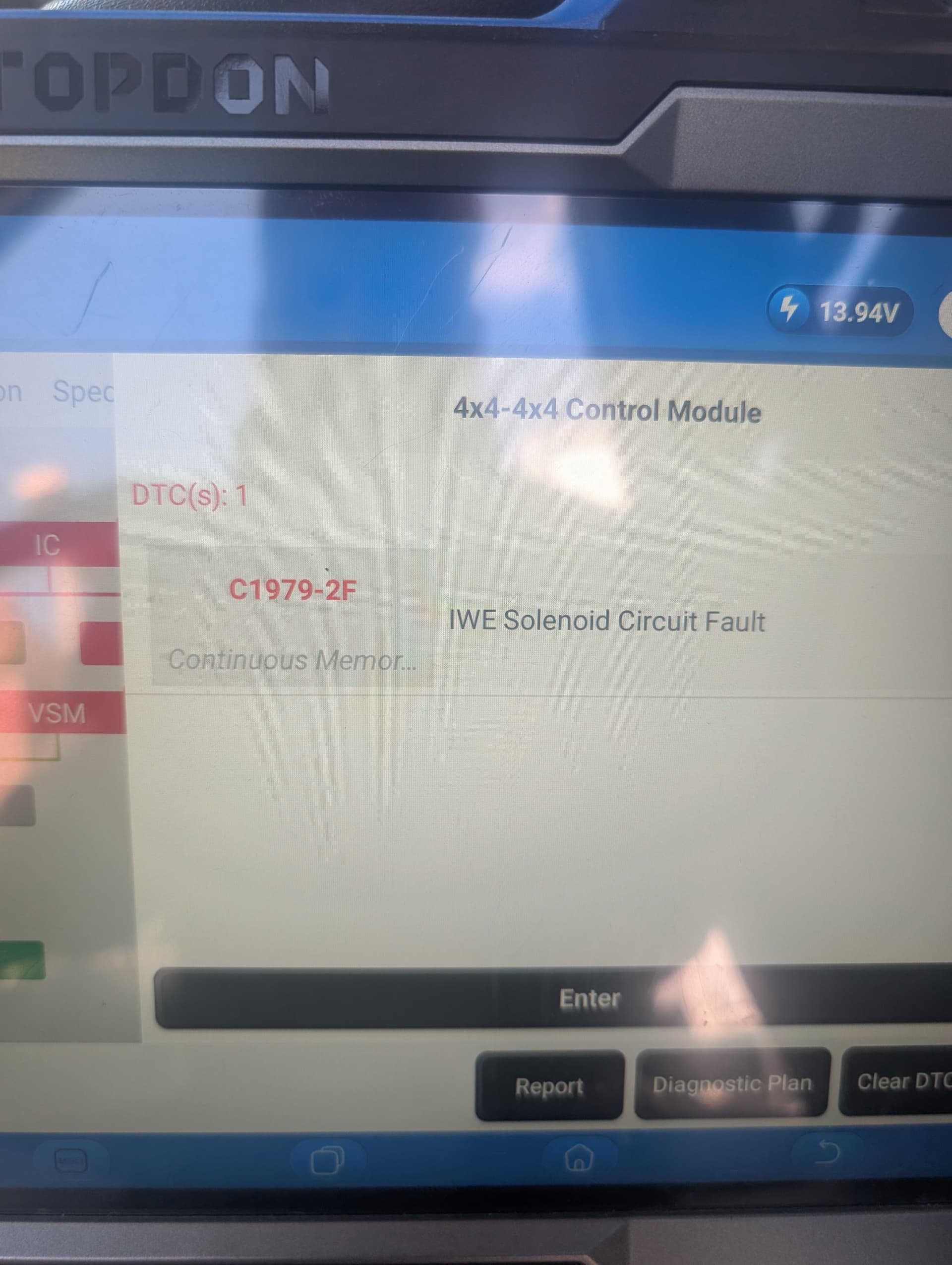
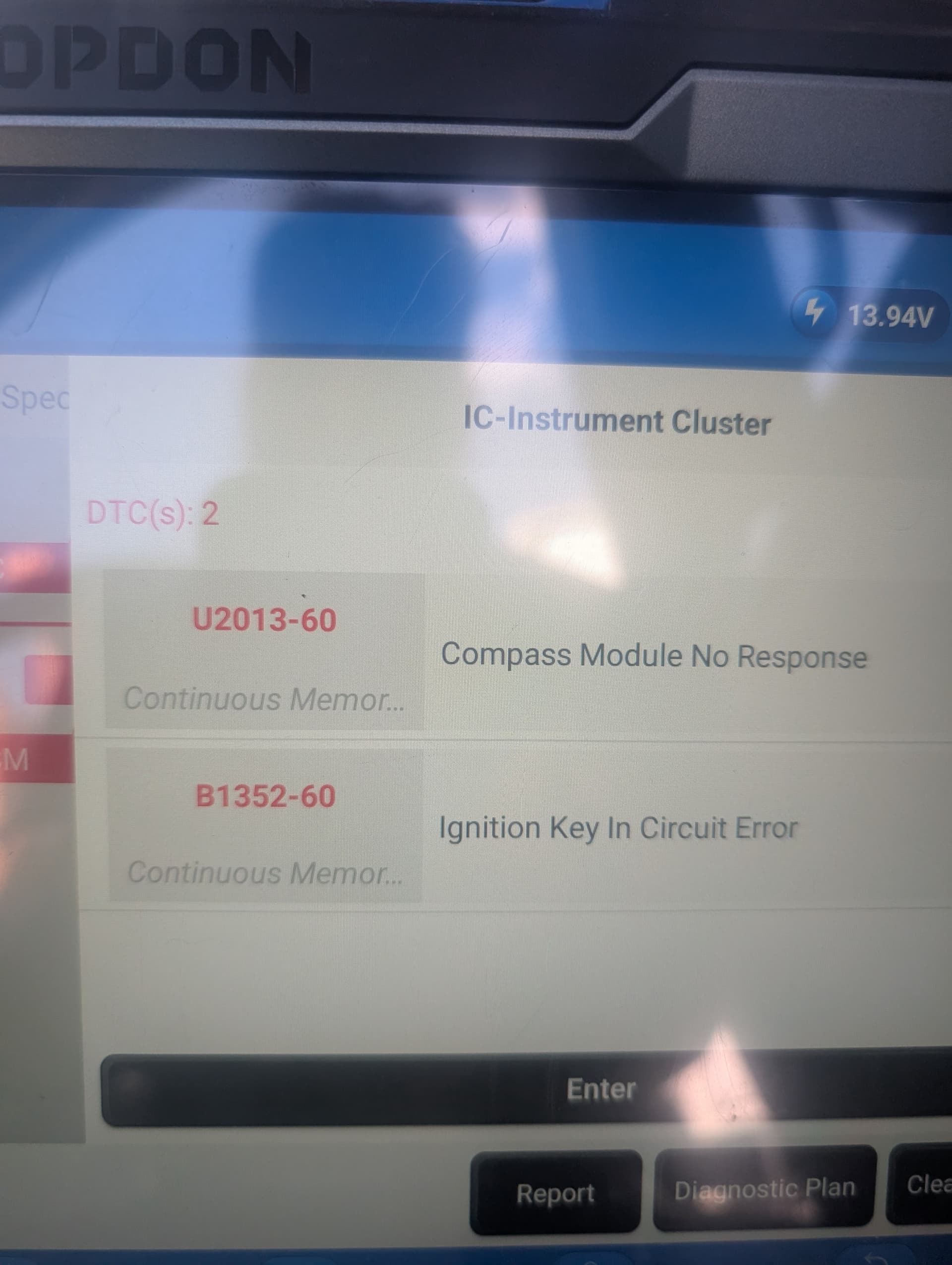
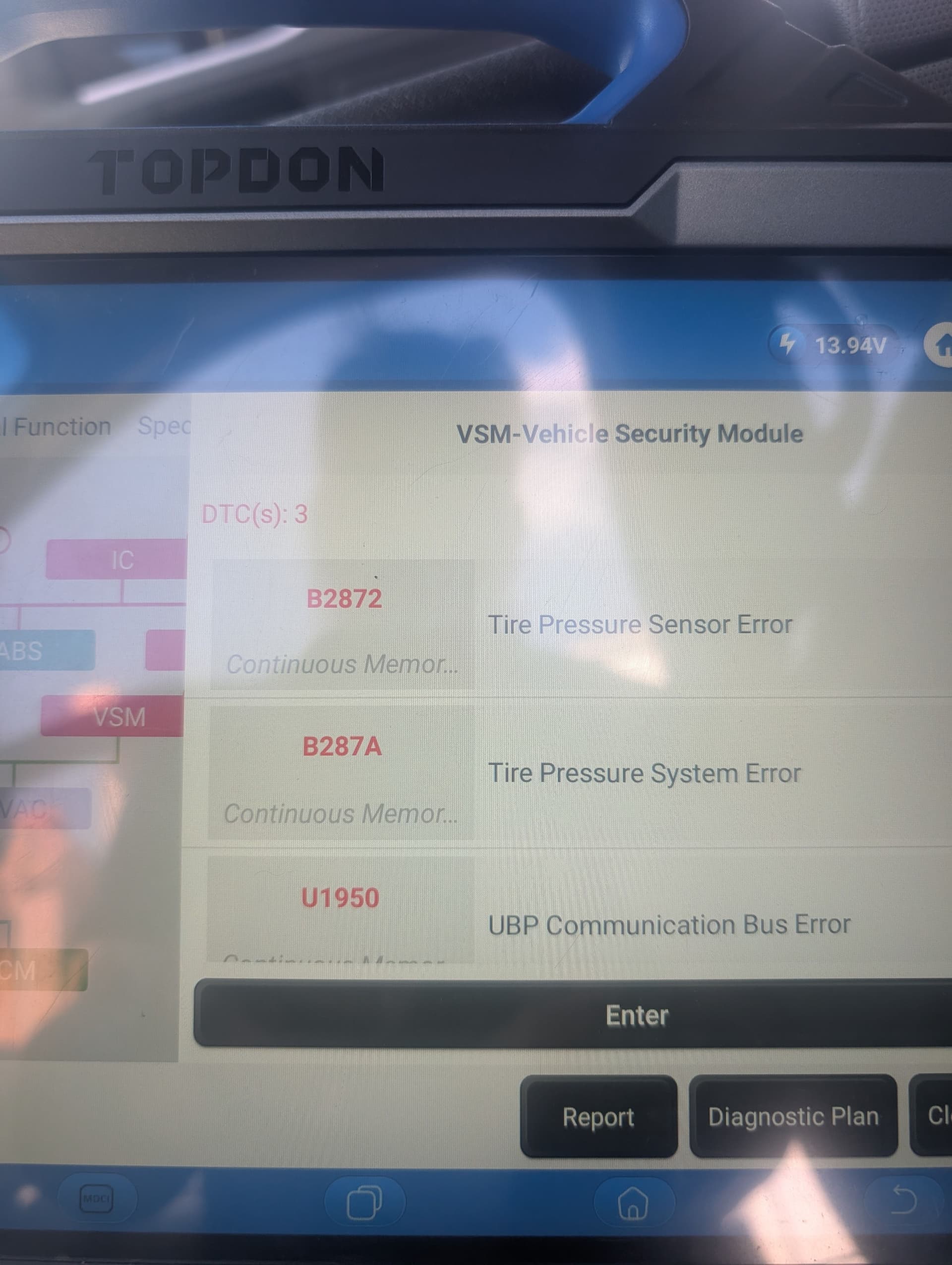
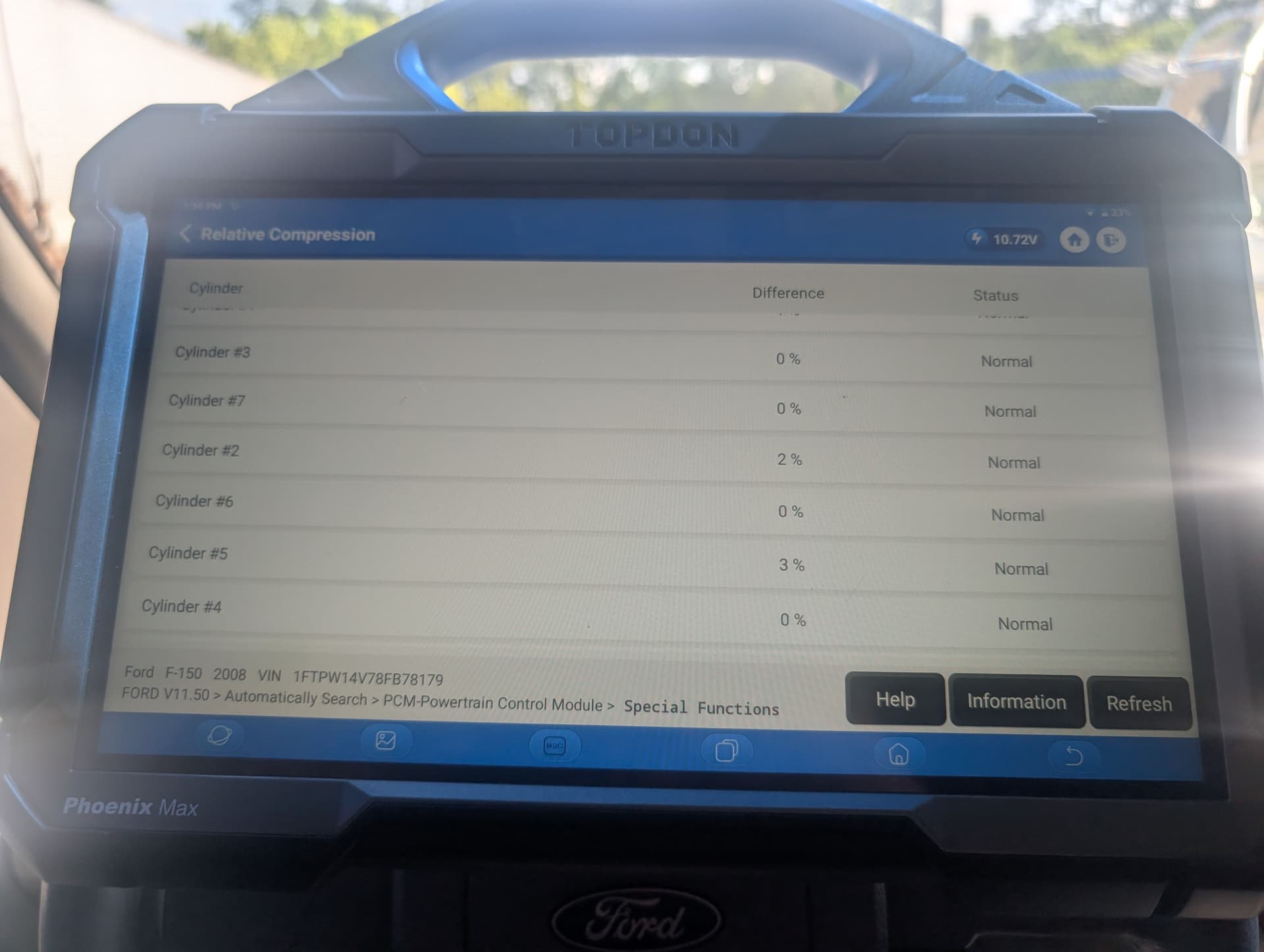
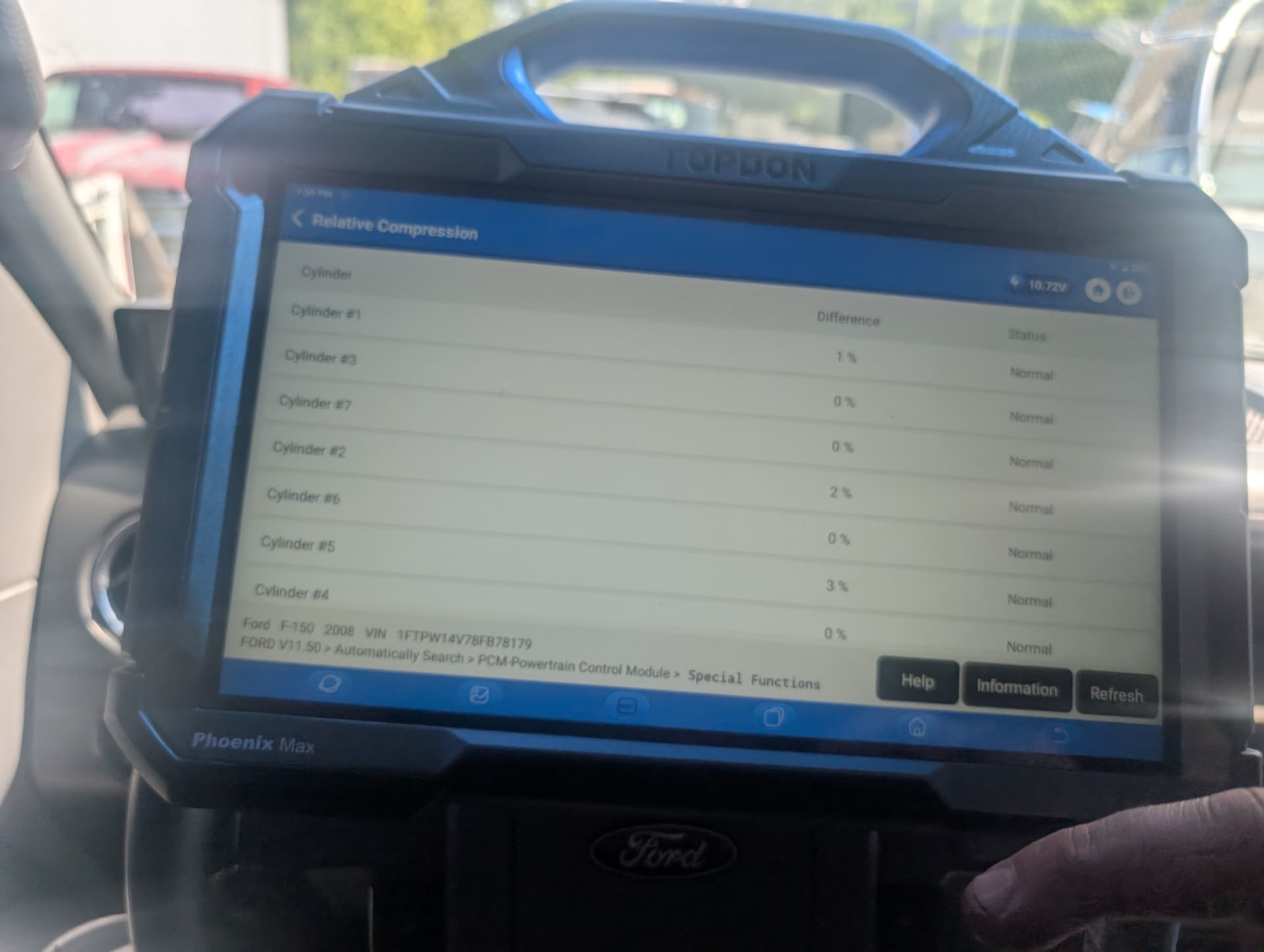
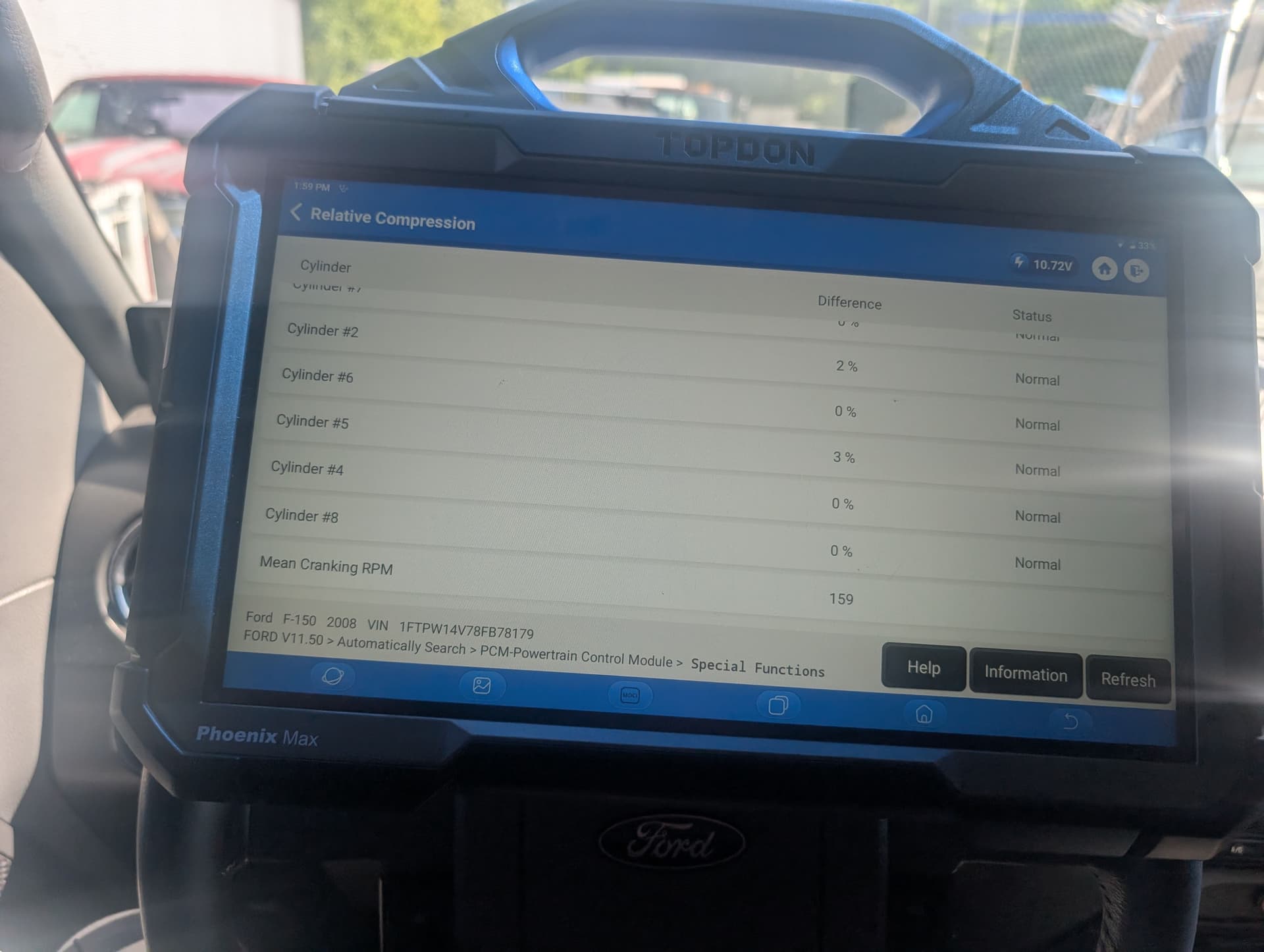
Here's what we found. The 4x4 control module threw a C1979-2F - an IWE solenoid circuit fault. The instrument cluster had two codes, including a compass module communication failure and an ignition key circuit error. The vehicle security module had three faults logged, covering tire pressure sensors and a UBP communication bus issue. On top of that, we ran a relative compression test through the PCM to check each cylinder individually - all eight came back normal, which is actually good news for the engine itself.
That's the value of real diagnostics. Instead of guessing at the power loss, we had a clear map of what was actually wrong. Some of those codes are directly related to the driveability complaint. Others are stored faults that need attention before they turn into bigger issues down the road. Either way, the owner now knows exactly what they're dealing with - no surprises, no unnecessary parts.
This is how we approach every automotive repair. We don't skip steps. A proper diagnosis up front saves everyone time and money, and it means the fix actually sticks. If your truck isn't running the way it should, this is exactly where we start.