Freightliner NOx and Forced Regen Diagnosis Done Right
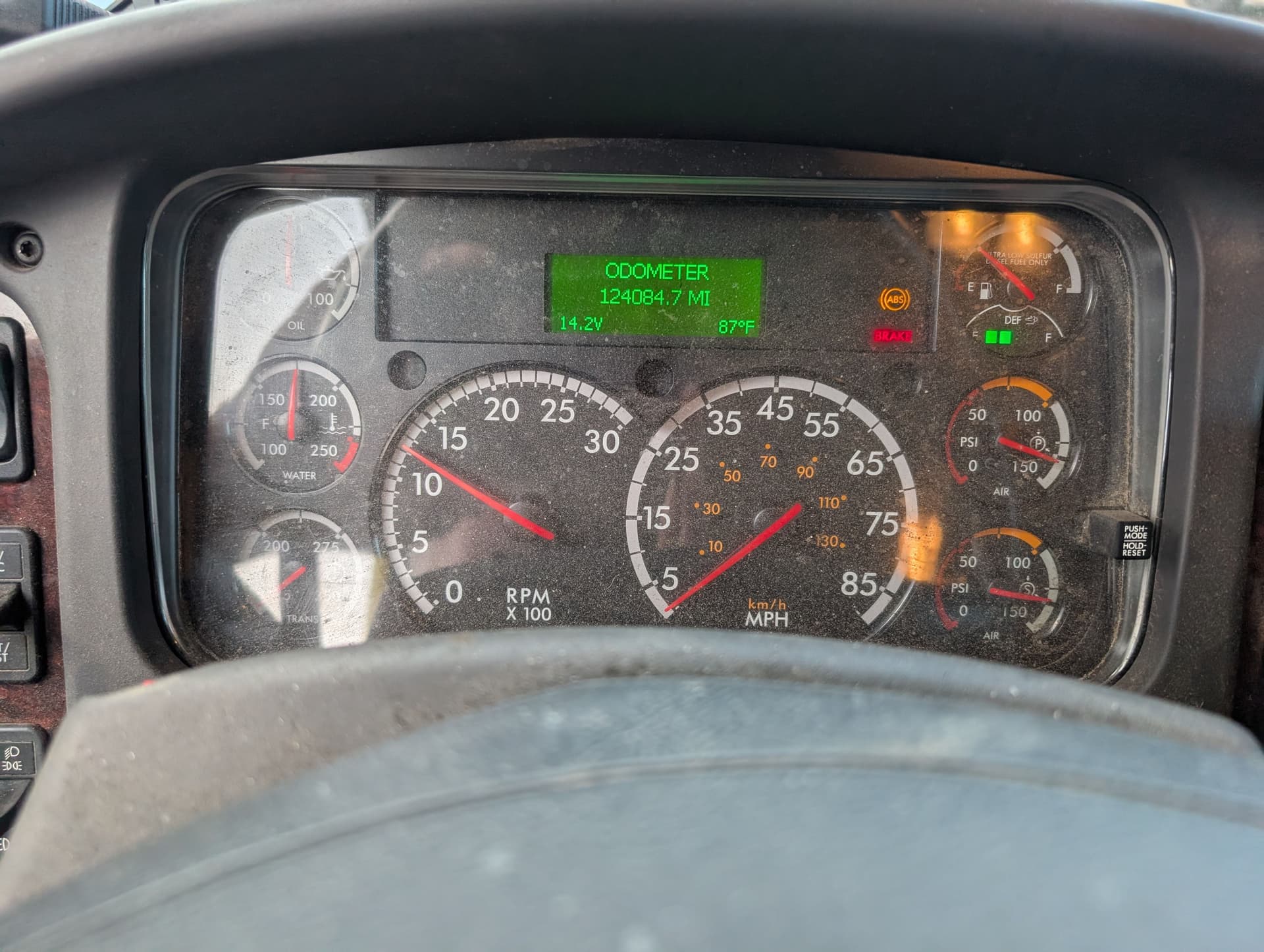
A sluggish truck is a money problem. Every mile you're running underpowered or dealing with forced regens is time and fuel you're not getting back. On this 2020 Freightliner, the complaint was simple - loss of power. The cause took some digging.
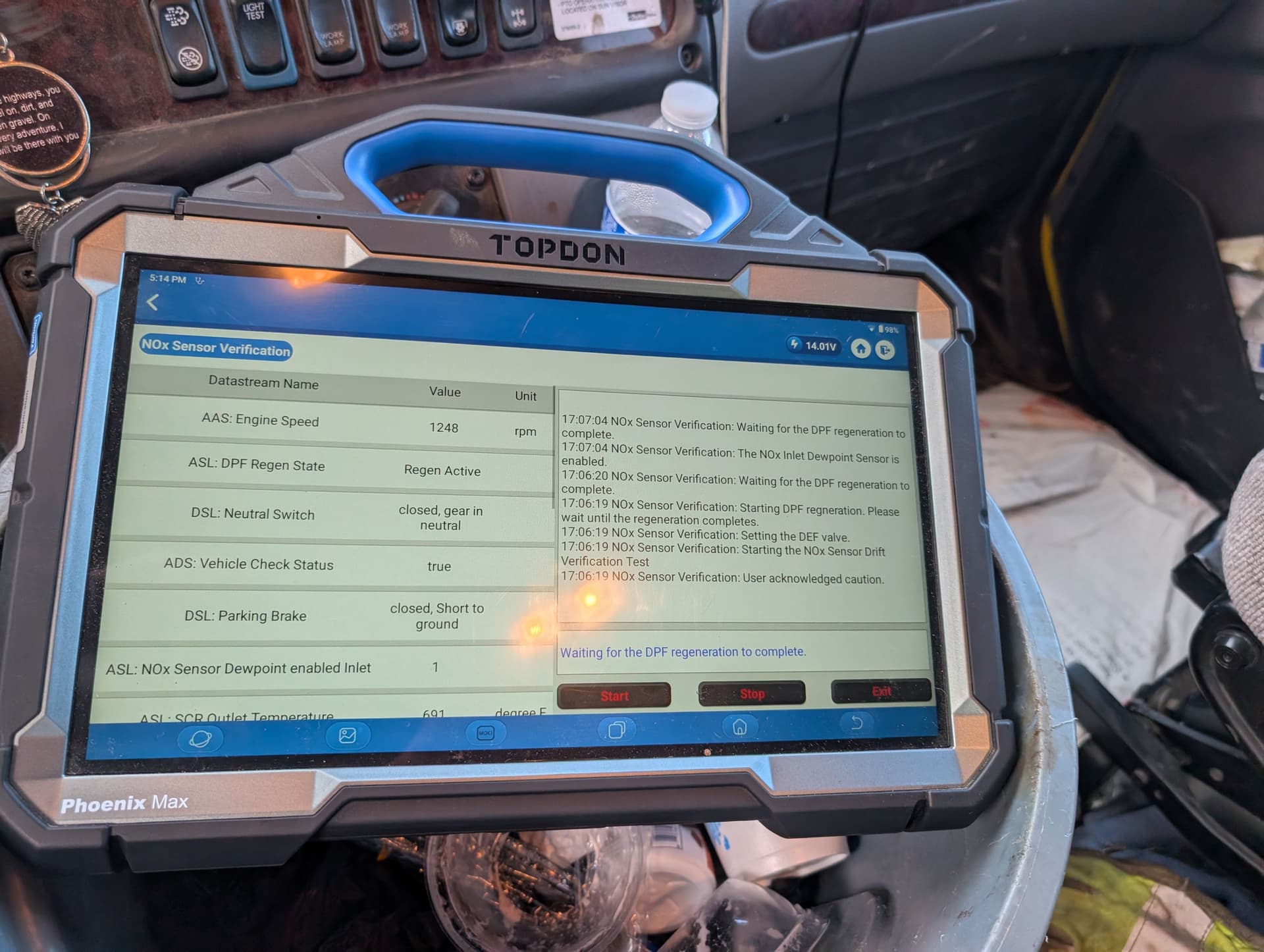
We connected our Topdon Phoenix Max diagnostic tool and got straight to work. The scan pointed us toward NOx codes and a forced regen issue. That combination is a classic sign that something in the aftertreatment system isn't communicating the way it should. Could be a drifting NOx sensor, a DEF valve issue, or a DPF that's not regenerating correctly. We don't guess - we verify.
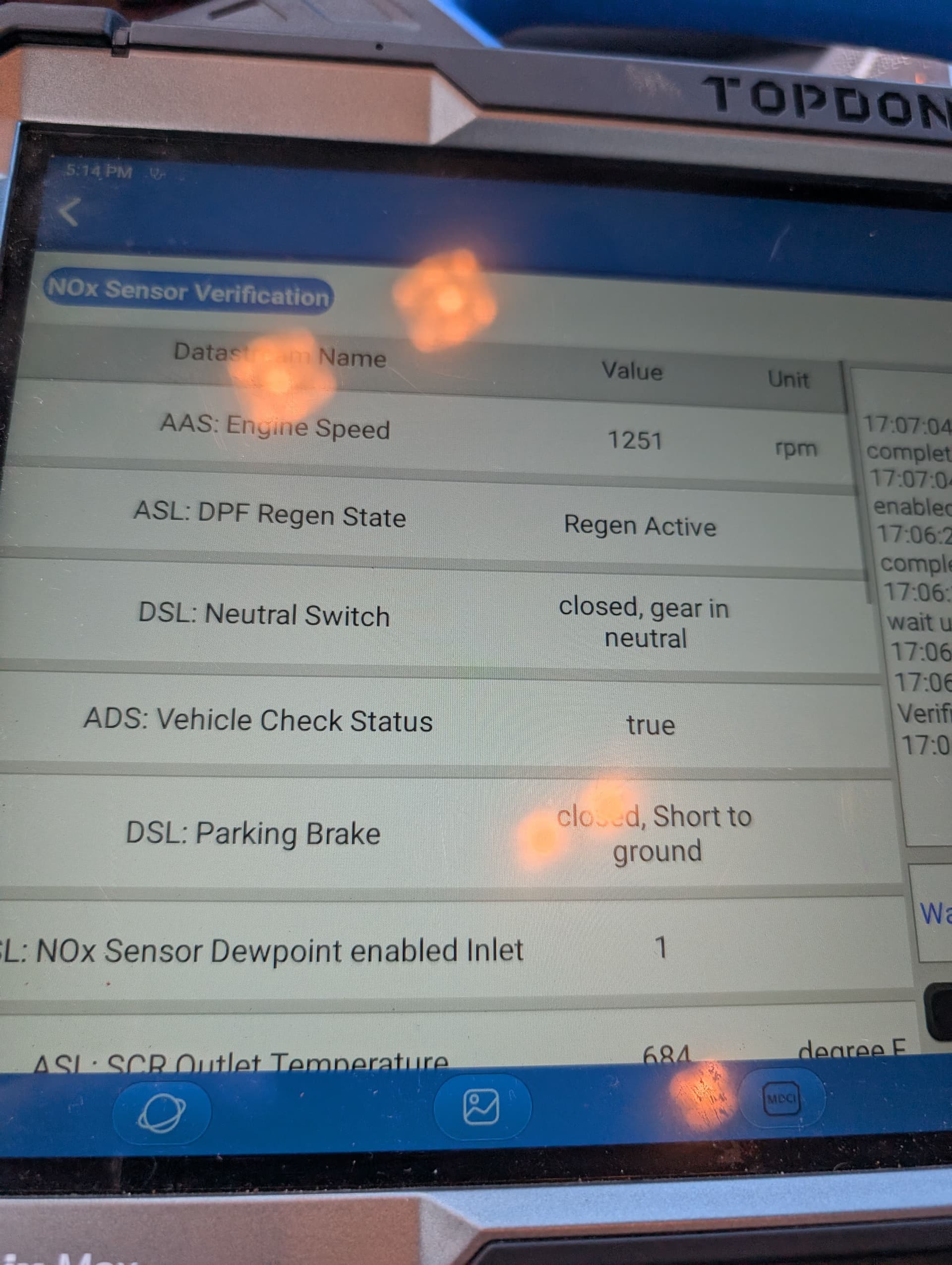
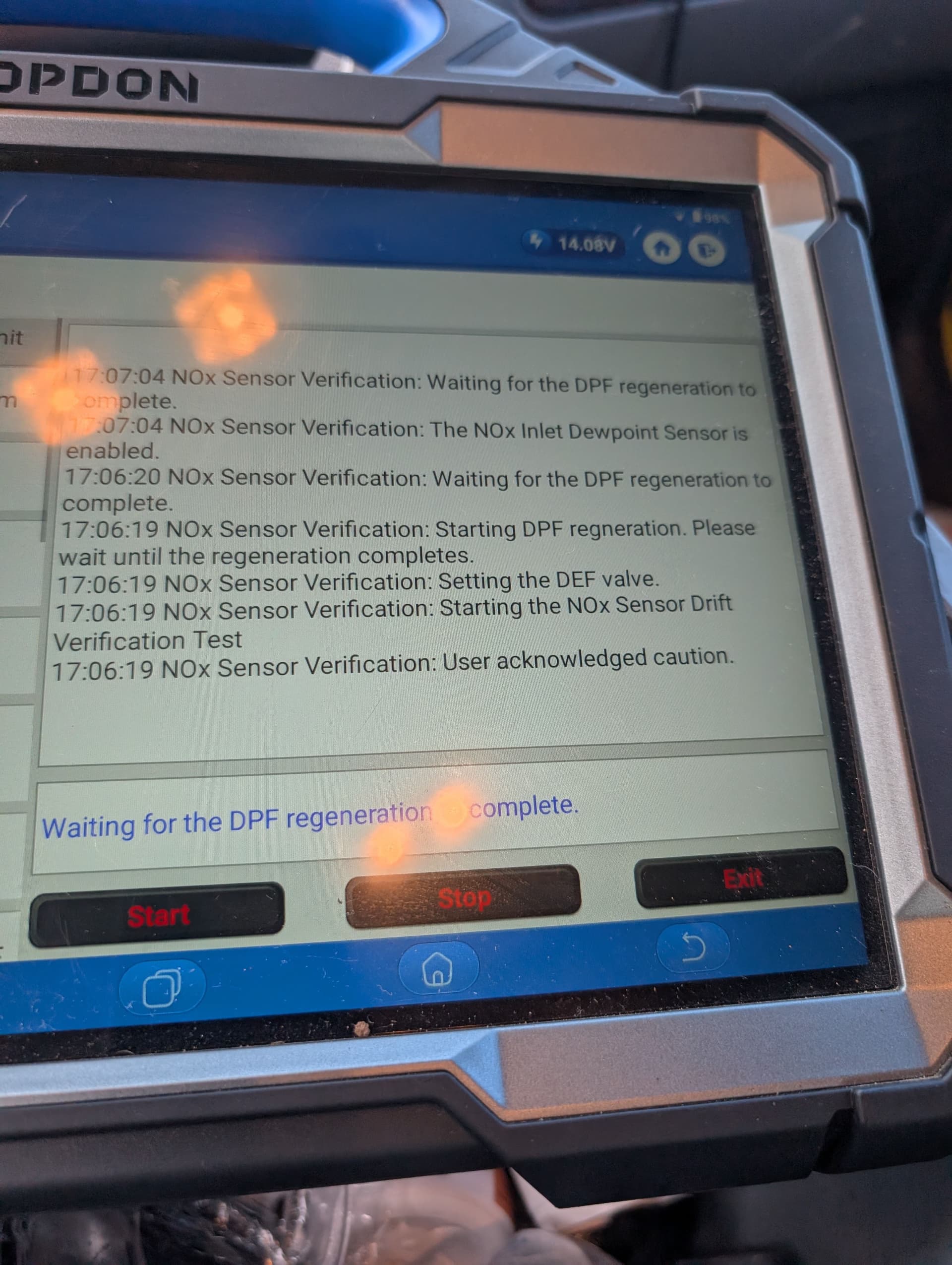
The NOx Sensor Verification process walks through a controlled sequence: setting the DEF valve, initiating a DPF regen, and running the NOx Sensor Drift Verification Test. We monitor live datastream values the whole time - DPF regen state, SCR outlet temperature, engine speed - so we know exactly what's happening in real time, not just what a fault code suggests happened in the past.
That's the difference between a shop that clears codes and hopes for the best, and one that actually traces the fault to the source. On a truck like this, getting the aftertreatment system operating correctly isn't just an emissions issue - it directly affects power output, fuel efficiency, and how often that truck gets pulled off the road for a forced regen.
Diesel diagnostics on modern emissions systems takes the right equipment and the experience to interpret what the data is telling you. If your truck is throwing NOx codes, running sluggish, or stuck in regen cycles it can't complete - that's not something to put off.